




Interview with Dr. Gay Jane P. Perez
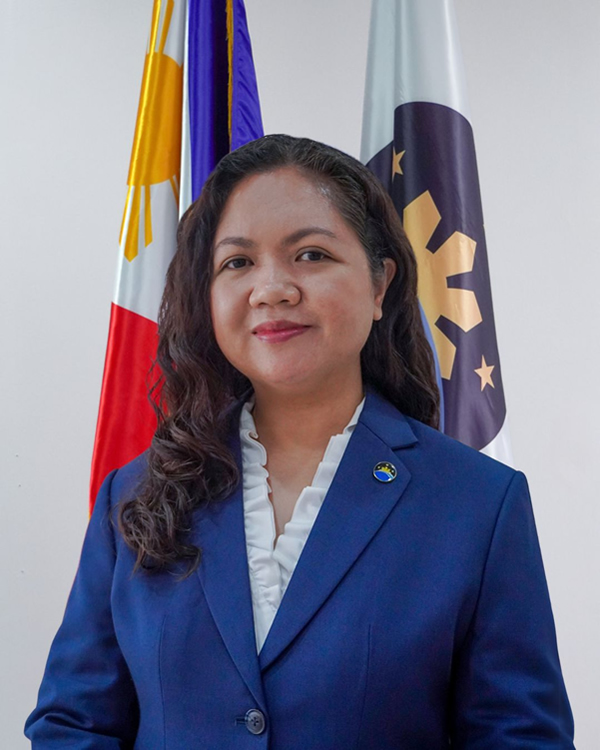
Dr. Gay Jane P. Perez
Officer-in-Charge
Philippine Space Agency (PhilSA), PHILIPPINES
[NOTE] Dr. Gay Perez has been appointed as the Ad Interim Director General of PhilSA on January 22, 2026.
Dr. Gay Jane P. Perez is the Deputy Director General for Space Science and Technology and currently the Officer-in-Charge of the Philippine Space Agency (PhilSA).
She is also a Professor at the University of the Philippines Diliman and President of the Technical Commission V of the International Society for Photogrammetry and Remote Sensing (ISPRS).
Her research has significantly contributed to understanding environmental dynamics, agricultural monitoring, and disaster risk management through advanced remote sensing techniques. She has received numerous awards, including the ASEAN-US Science Prize for Women and the Outstanding Women in the Nation's Service (TOWNS) Award. Dr. Perez holds a Bachelor of Science, Master of Science, and Doctor of Philosophy in Physics from the University of the Philippines, Diliman, and was a Postdoctoral Fellow at NASA Goddard Space Flight Center.
On 17–21 November 2025, PhilSA co-hosted APRSAF-31 in Cebu, Philippines. The APRSAF secretariat interviewed Dr. Perez to share her experience and visions with the APRSAF community.
[NOTE] The following interview with Dr. Gay Perez was conducted on Dec. 23, 2025. Dr. Gay Perez was appointed as the Ad Interim Director General on January 22, 2026.
APRSAF Secretariat:
First of all, we would like to congratulate you on the big success of APRSAF-31 held in Cebu, having 561 attendees in total* from 40 countries and regions. How do you evaluate this annual meeting?
*490: on-site, 71: online
Dr. Perez
Well, I can say that we are very pleased with the output of the meeting. First is the number of participants; it is 561 altogether with 490 on-site and another 71 online.
APRSAF-31 was, by all measures, a successful and meaningful gathering. The strong participation from numerous organizations across the Asia-Pacific region reflects the continued relevance of APRSAF as a platform for dialogue, cooperation, and concrete action. I believe this exceeded the number that we were expecting. We are really pleased with this outcome since they are not only from the Philippines but all over the world. As for the Filipino participants, we had 197 representing different sectors, universities, academia, government agencies, and the private sector, from across the country. We had very insightful discussions, and we are thankful to the speakers and those who contributed to this event. Holding this meeting in Cebu provided a good venue for the participants to actively engage, network, and discuss with their peers.
Beyond the number of participants, what stood out was the depth of discussions, the diversity of perspectives, and the clear emphasis on translating space technologies into real societal benefits. This annual meeting, once again, demonstrated how collaboration in space can directly support sustainable development, disaster resilience, and inclusive growth across the region.
Hearing the feedback that we got from both local and international participants, they were very pleased with the discussions and the connections that they established. This strengthened cooperation and opened new avenues for future collaborations, especially with those whom they just met for the first time during the event. Based on these reactions, I can say that APRSAF-31 was successful and impactful, and we are honored to host this event.
What added value to the APRSAF-31 was having the Philippines-Japan Space Economy Co-Creation and Networking Symposium the day before the event, which brought several private companies from Japan to participate. The goal was to match them with Filipino companies that may not be involved in space or have space products or services in their current portfolio. They may be able to expand or diversify it to cater more to space. It is also a good step that we hosted a business-to-business workshop. Although it was logistically challenging for us, it contributed to overall success.
*Please refer the article “Philippines, Japan highlight growing space economy ties, strengthen space cooperation” on the PhilSA’s website:
https://philsa.gov.ph/news/philippines-japan-highlight-growing-space-economy-ties-strengthen-space-cooperation/
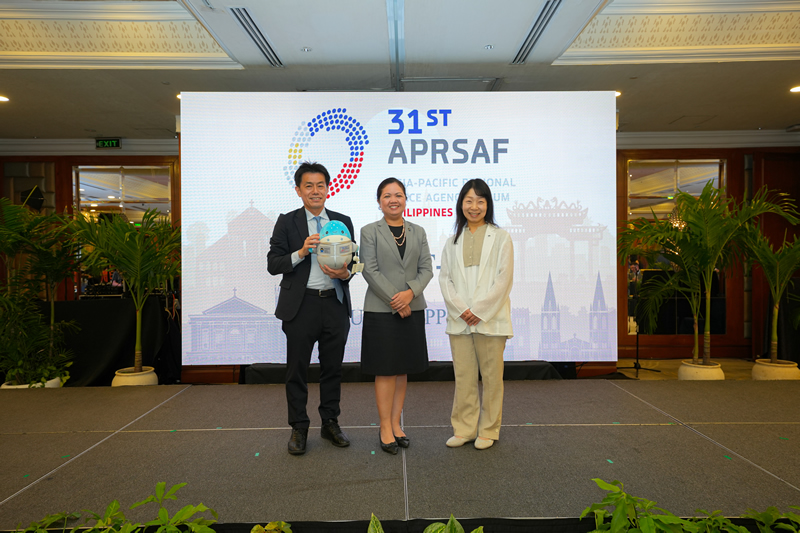
(L-R) APRSAF General Co-chair Mr. FURUTA Hiroshi , General Co-chair Dr. Gay Jane P. Perez , and ExCom Chair Dr. ONODA Masami.
APRSAF Secretariat:
The Philippines hosted APRSAF-23 in 2016, with DOST-PCIEERD as a co-host. Do you feel any differences between these two meetings after almost ten years?
Dr. Perez
Hosting APRSAF again after almost a decade highlighted how much both the Philippines and the regional space community have evolved. I had the privilege to be part of APRSAF-23 in 2016 in the Philippines, hosted by DOST-PCIEERD. Before that, my very first APRSAF was APRSAF-21, held in Tokyo in 2014, two (2) years before the Philippine meeting. There was a big group from the Philippines, with Dr. Joel Joseph S. Marciano Jr., the former Director-General of PhilSA, among them. At that meeting in Tokyo, we expressed our intention to co-host the APRSAF in the Philippines. After that, we were also at the APRSAF-22 in Bali, Indonesia, in 2015, to prepare for APRSAF-23 and witness how the preparations were done.
The Department of Science and Technology (DOST) took the lead on the APRSAF meeting in Manila in 2016. I had the opportunity to co-chair a session. The Philippine Space Agency had not been established yet at that time. Though, we have already initiated our space activities, notably the development of Diwata-1, the Philippines’ first domestically built satellite launched in March 2016, with support from Japanese universities.
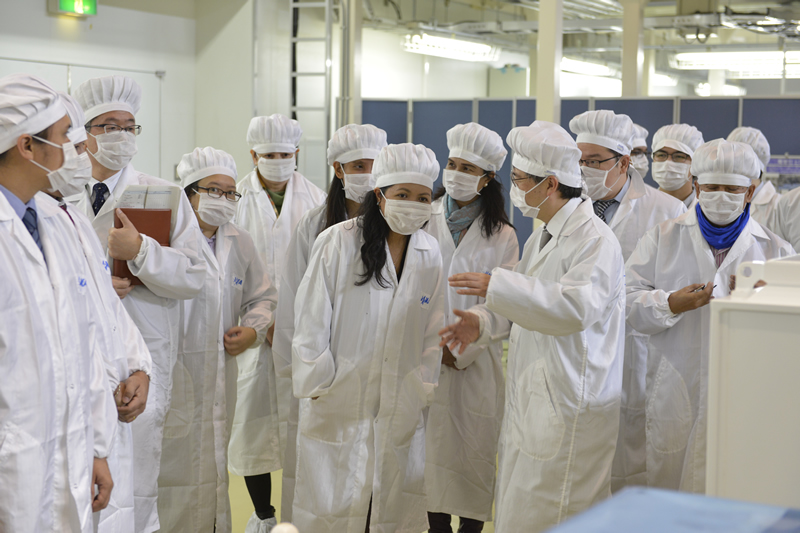
Diwata-1 microsatellite turnover at the Japan Aerospace Exploration Agency.
Photo courtesy of JAXA.
At that time, we had no idea that we would have a space agency later and that we would build seven (7) more satellites. We had ambition. We were able to demonstrate that we can build satellites. We have the aspiration to do more, but everything is very nascent, very new—that satellite development was led by the University of the Philippines (UP) with funding from the government.
Today, with the establishment of PhilSA, the country participates not only as a host but as an active contributor to regional initiatives. The discussions at APRSAF-31 were more application-driven, with a stronger focus on operational services, policy alignment, and private sector engagement. This shift reflects the region’s growing maturity and its collective move from capacity-building toward sustained implementation. The utilization of spaceborne data, such as remote sensing for various applications, is done by other agencies, including the Department of Environment and Natural Resources (DENR), National Mapping and Resource Information Authority (NAMRIA), Philippine Institute of Volcanology and Seismology (PHIVOLCS), Philippine Atmospheric, Geophysical, and Astronomical Services Administration (PAGASA). Now, for APRSAF-31, we have one agency that coordinates all this effort for the country. That is the Philippine Space Agency. I would say we have grown to become more of an emerging spacefaring and space-capable nation. This means that, during the hosting of APRSAF, we had different stakeholders, not in their individual capacity, but collectively as part of the Philippines’ space ecosystem, which did not exist in 2016. They are still from the universities or other government agencies, but now, they are part of the Philippines’ space ecosystem that we are building here.
Our current ambition is to develop more satellites. We want to develop our space ecosystem, whose work is not limited to satellite development or applications, but everything in between. This includes developing our space industry, creating a sustainable workforce and the human capital behind it, doing research and development, and strengthening international cooperation on space activities and space policy, law, and governance. As we face the region, we need a more integrated, collective, and unified approach. Hosting APRSAF-31, there was a stronger presence of the industry from outside the Philippines. Compared to what it was in 2016, companies are actively contributing to space activities in the region now, both established companies and start-ups. So, that is another difference.
There is also a difference in working groups. They are organized almost the same even after the change in the title of the working groups, but they are more interdisciplinary in the fundamental topics. For example, we had a joint session at APRSAF-31 between the Enhancement of Space Capability Working Group (SCWG) and the Space Policy and Law Working Group (SPLWG) to discuss how policy and technology are interwoven. I believe it is reflected in the output of APRSAF-31, where it is proposed to have a “Space Sustainability Working Group (SSWG).” There are transformations happening, which reflects how the space ecosystem has matured now compared to what it was before.
APRSAF Secretariat:
Thank you. And, back to APRSAF-31, what was PhilSA’s aim for the theme of APRSAF-31, “Empowering the Region through Space Ecosystems in Action”? How did you feel about the participants’ reaction to this theme?
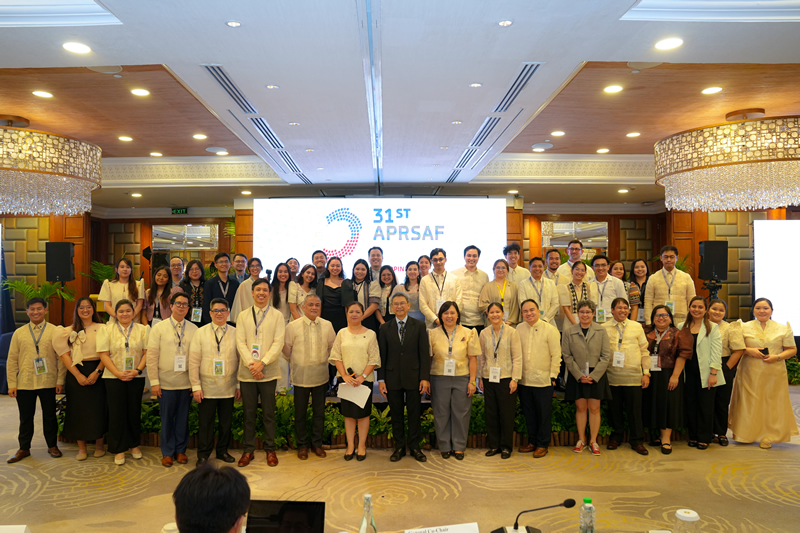
The Philippine Space Agency Team during APRSAF-31.
Dr. Perez
We considered the theme introspectively, or looking at what we have in the Philippines, what we can bring uniquely, what we can be proud of, and what we want to have. Although we do not have a space industry yet, it is something that we want to grow, but the previous APRSAF themes already touched on that.
Then, we chose this theme to emphasize that space development is no longer the domain of a single institution or sector. Coordinating and orchestrating our activities across the different stakeholders is at the center of our vision in building a robust space ecosystem.
Effective space ecosystems require collaboration among government, industry, academia, and international partners. The phrase “in action” was intentional as it underscores the need to move beyond planning and toward tangible outcomes. Based on the discussions, workshops, and bilateral engagements during APRSAF-31, the participants resonated strongly with this message. Many shared concrete examples of how integrated space ecosystems are already delivering value on the ground, particularly in disaster management, agriculture, and environmental monitoring. The space ecosystem is inspired by the space value chain, which serves as the guiding framework for everything that we do in the Philippine Space Agency. The space value chain has five components. The first is the upstream part or the satellite development. The second is the accessibility and suitability of data. The third is the ground infrastructure to bring data and distribute it to users. The fourth is the capability to interrogate and analyze the data and the fifth is the ability to act on the data. Action is established only when we derive the socioeconomic benefits from space. It is very important, and that is what we want to highlight in our theme.
We have the space ecosystem in action or acting on the information that we get from satellites and further developing the space industry. These are many different manifestations of action. Of course, we need to expand it not just in the Philippine context but bring it to the Asia-Pacific region. We want this model of space ecosystem in action to be a regional effort. Hence, the other keyword in the theme, “empowering,” greatly reflected what we were envisioning. We also thought that “empowering” is an appropriate and unique word not yet found in the previous themes of APRSAF.
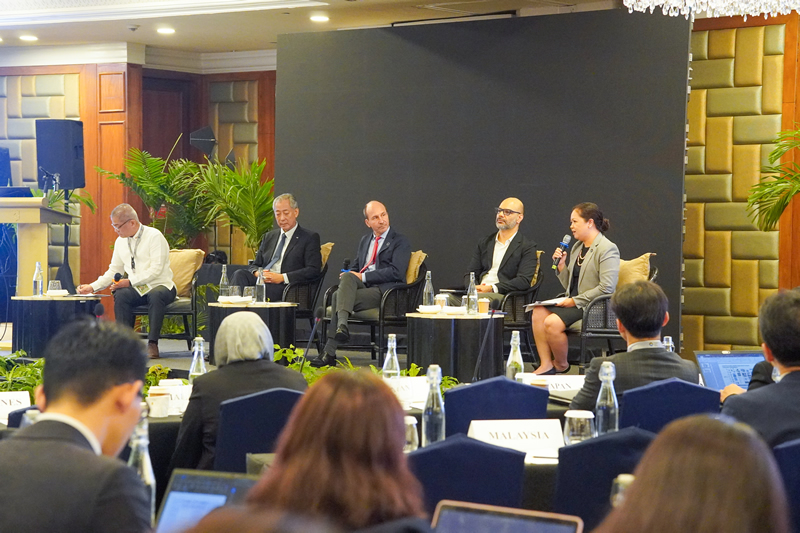
Dr. Gay Perez joins fellow panelists during Plenary Session 1, “Regional Perspectives on Space Ecosystems in Action.”
As to the reaction from the participants on this theme, I was delighted personally to find interventions on this theme in their statements, presentations, and space agency reports. It was what we wanted to do or challenge everyone to do, which is in terms of not individual efforts, but how we can do more to strengthen regional cooperation and collaboration, for example, on joint missions. It was very good to see the participants, including the heads of space agencies or their representatives, giving their thoughts on the theme and how important it is to work together.
APRSAF Secretariat:
Back to APRSAF-31, it was our honor to have His Excellency President Ferdinand R. Marcos Jr. at the meeting. It was a very remarkable moment, not only for APRSAF-31, but also for the history of APRSAF.
Dr. Perez
Thank you. We are also proud that we were able to conduct this. When we decided to host the APRSAF, we had visions of how we wanted it to turn out, and part of that vision is having the President attend the APRSAF. We are thankful to the President and his team for graciously joining our event. Now, I must say that this would not have happened without our previous efforts, not only by PhilSA alone, but also by JAXA. President Marcos met Dr. Yamakawa, the President of JAXA, at Expo 2025 in Osaka, Kansai, Japan. At that meeting, we were able to invite the President in person to support and attend APRSAF-31. The meeting also emphasized how the Philippines intends to cooperate with Japan in general and with JAXA to further develop our capabilities on space technology and space applications to serve the needs of the Filipino people. It was in that meeting that the President emphasized the importance of space for the service of the Filipino people. This was also reiterated in his speech at the APRSAF-31, which motivates us in the conduct of our space-related activities, development of technologies, products, and solutions, provision of services, and policies that will benefit and serve the Filipino people.
There are many doors that have opened thanks to APRSAF in terms of collaborative work. I am thinking of two things right now. One is a proposal with PASCO Corporation from Japan on downstream applications using space for disaster response. The other one is the signed Memorandum of Understanding with Star Signal Solutions. There will be joint projects with them. They received a grant under the Space Strategy Fund for their work with us here in the Philippines. We will have a kickoff in January 2026. These are just examples, and there are many more in all the working groups. We instructed the Co-Chairs from the Philippine side when we were developing the program to see how we can establish partnerships through these sessions. Although it is the end of the many years of preparation, APRSAF-31 started a new chapter of a stronger collaboration between the Philippines and Japan.
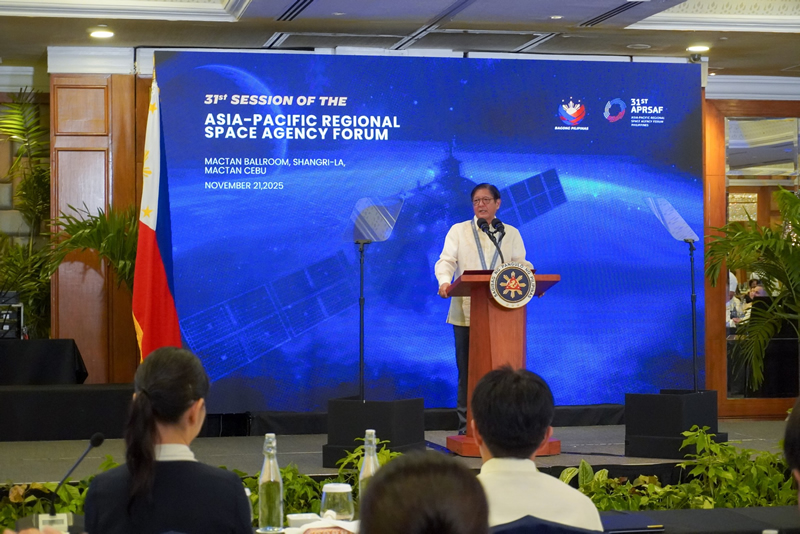
His Excellency President Ferdinand R. Marcos Jr. graced the 31st Session of the Asia-Pacific Regional Space Agency Forum (APRSAF-31) in Cebu,
where he delivered a special message.
APRSAF Secretariat:
How about the support or backup from the government? How do you collaborate or cooperate with other countries in the Asia-Pacific region?
Dr. Perez
The good thing with getting the President to support our APRSAF and his presence there is that he sent the message that the Philippine Space Agency obtained the support of the Philippine government. This is very important as we engage with other countries, our counterparts from other space agencies in the region. The support from the highest official signals to the world that we are focused on our aspiration of becoming a spacefaring and space-capable nation, and we are open to collaborating with other countries.
APRSAF Secretariat:
Well, thank you. I really understand it. My next question is about a little bit apart from the meeting itself. The place of the meeting, Cebu, suffered damage from an earthquake and several storms this year. How does the Asia-Pacific space cooperation or network contribute to natural disaster response in the Philippines? As a country with many disaster events, how do you collaborate with APRSAF, including Sentinel Asia and other mechanisms, for disaster management activities using space technologies?
Dr. Perez
When these unfortunate events happened, we were very concerned about APRSAF. At some points, we were seriously concerned that it might not push through. We visited the area to confirm and evaluate that the earthquake did not cause structural damage that would make the venue unsafe. Thankfully, we passed that evaluation, and then there came a strong storm. There were severe floods in the region, but thankfully, the venue did not sustain damage. This happened one week before the APRSAF, which really troubled us.
But this also presented an opportunity, where we could highlight even further how important space is considering the disasters that make our country vulnerable and the impacts of climate change that exacerbate this situation. We were able to heighten awareness on the value of space technology for disaster response and how we contribute to it through Sentinel Asia. We commit to maintaining our active role in Sentinel Asia, not just as a data user, but more so as a data provider.
Currently, we only have one active satellite, Diwata-2. By next year, we will be having the Multispectral Unit for Land Assessment (MULA) satellite in orbit. We look forward to contributing our data to Sentinel Asia partners with our new satellite. The important part that I want to emphasize is the value of coordination among different agencies to ensure that data, maps, and information are delivered promptly and utilized for decision-making, especially during the response and mitigation phases.
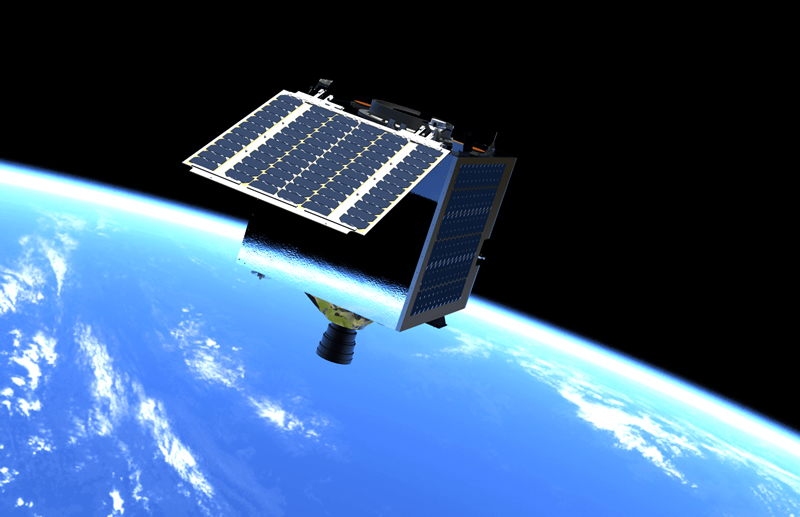
3D render of the MULA satellite. Photo courtesy of Surrey Satellite Technology (SSTL).
I want to add the importance of continuously developing capacity domestically. We have a program called PINAS, or the “PhilSA Integrated Network for Space-Enabled Actions towards Sustainability.” This program is an avenue to engage different local government units, not just national government agencies. We conduct workshops on different applications of space, such as disaster risk reduction and management and agricultural monitoring. In this workshop, we also assess the needs at the local government level to provide more suitable solutions for them. We distribute data and maps and teach them how they can access future products from the Agency. This is another effort that helps us engage many of the decision-makers or the responders, especially in times of disaster. Regionally, it is important that we continue to share our experiences, best practices, and lessons learned in terms of using satellite for disaster risk reduction and management. Sentinel Asia is a good platform for this. We hosted the 9th Joint Project Team Meeting for Sentinel Asia STEP-3 (JPTM2024) in the Philippines in 2024, which provided a venue to exchange these experiences. There is so much we could learn by listening to the experiences of other space agencies and institutions in the region.
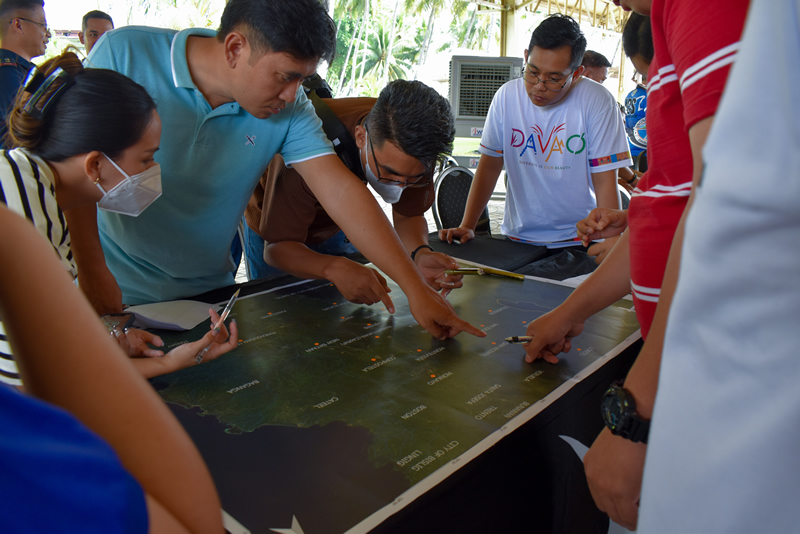
PhilSA’s PINAS Workshop in Davao City, Philippines.
APRSAF Secretariat:
Thank you. And, as my last question, although you have already answered partly, I would like to have your opinion about cooperation or collaboration for the development or growth of space activities in the Asia-Pacific region. How will PhilSA, with other space-related agencies/companies in the Philippines, including governmental institutions, contribute to the Asia-Pacific region?
Dr. Perez
As an emerging space ecosystem, we want to develop it further. The space industry in the Philippines is something we want to enhance. The downstream side has been there for quite a while already. We have made a head start on that, and we will sustain our efforts on the downstream side. But we do not have an upstream segment of the space industry at the moment. We have space-adjacent industries, but not a space industry. We hope that, in the coming years, there will be more activities in space done by private companies in the Philippines. We are also working on the “Space Industry Development Roadmap 2025 to 2034,” which will be released in early 2026. It aims to encourage the involvement of local space adjacent industries to become a full-fledged space industry. We also hope to continue and strengthen our collaboration with other space agencies in the region. We are looking forward to formalizing more agreements with other space agencies like the Australian Space Agency and the Geo-Informatics and Space Technology Development (GISTDA) of Thailand.
With the Philippines chairing the Association of Southeast Asian Nations (ASEAN) in 2026, this is a fortunate occasion for us to elevate the appreciation of space. Hence, PhilSA is proposing to have the ASEAN Declaration on Space Cooperation. The Declaration will be adopted at least at the level of the ministers, if not the Heads of State themselves. It will also serve as a framework to further strengthen cooperation in space.
One more thing I would like to add is the recent signing of the Artemis Accords for space exploration. The signatory was held during the ASEAN Leaders Summit in Kuala Lumpur in October 2025. We are excited about this agreement because it opened opportunities for collaboration and participate in the Artemis program itself.
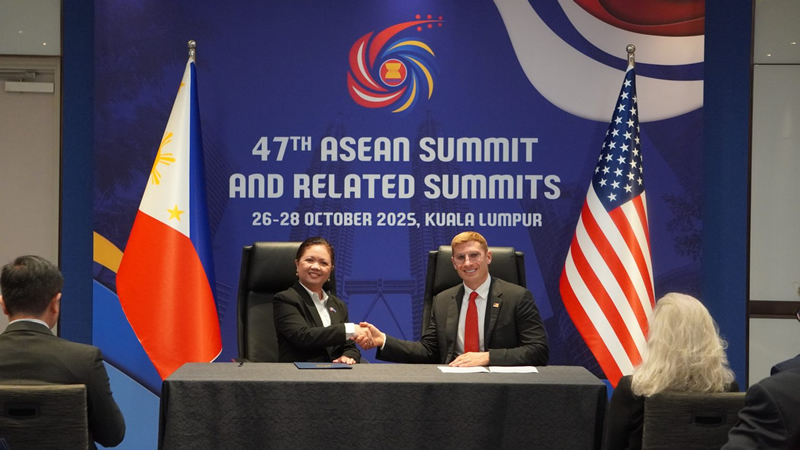
PhilSA Officer-in-Charge Dr. Gay Jane P. Perez (left) shakes hands with U.S. Under Secretary Jacob Helberg after signing the Artemis Accords on behalf of the Philippines (27 October 2025, Kuala Lumpur, Malaysia).
APRSAF Secretariat:
Okay, thank you very much. Here, I conclude my questions, and I hope for your further success.